Explainability Testing
Explainability Testing
In this tutorial, you will learn about Explainability Testing of AI models. AI models often demonstrate remarkable accuracy, they sometimes act like “black boxes”—delivering decisions without clarity on how those decisions were made. This lack of transparency can be risky in high-stakes environments. To address this, Explainability Testing has emerged as a crucial quality assurance step in AI development.
What is Explainability Testing?
Explainability Testing is the process of evaluating how transparent and interpretable an AI model’s decisions are to human users. It ensures that the logic behind AI-generated outputs can be understood, scrutinized, and trusted by developers, stakeholders, and end-users.
This type of testing focuses not just on whether the model’s output is correct, but also on whether we can understand *why* the model made a particular prediction or decision. It is closely tied to the field of Explainable AI (XAI), which provides frameworks and tools like LIME (Local Interpretable Model-agnostic Explanations) and SHAP (SHapley Additive exPlanations) to interpret model behavior.
Sample Example
Explainability Test Case
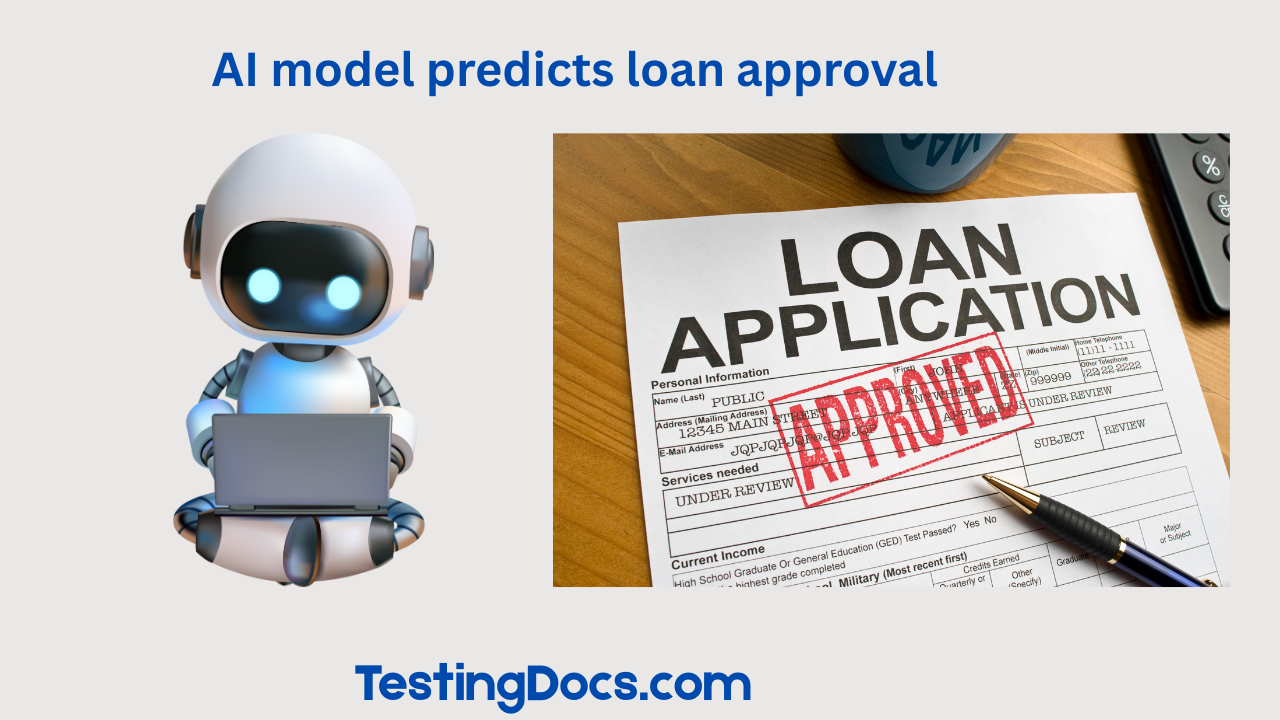
Test Case: An AI model predicts loan approval for a banking application.
Test Objective:
The test objective is to verify if the AI model provides a human-readable explanation for its decision to reject a loan application.
Test Steps:
- Input loan applicant data into the AI system (e.g., age: 27, income: $25,000, credit score: 600).
- Receive the prediction (Loan Rejected).
- Invoke the explainability tool (e.g., SHAP) to get feature contributions for the decision.
- Check if the explanation identifies key reasons (e.g., low income and low credit score contributed to the rejection).
Expected Result:
The AI system provides a clear and interpretable breakdown of feature contributions. The user understands that income and credit score were the most influential factors.
Actual Result:
To be filled after the testing. Mark the corresponding testcase as “Pass/Fail”
Advantages of Explainability Testing
Some of the advantages of Explainability testing:
- Transparency: Helps users understand AI decisions, building trust and confidence in the system.
- Compliance: Supports adherence to regulatory standards such as GDPR and AI Act, which mandate algorithmic accountability.
- Error Detection: Aids in identifying bias, unfair treatment, or flaws in model logic during development.
- Improved Debugging: Offers insights into model weaknesses, leading to more informed refinements.
- User Trust: End-users are more likely to adopt AI solutions when they can comprehend the reasoning behind decisions.
Explainability Testing is no longer optional—it is a core requirement for building responsible, ethical, and robust AI systems that can be trusted and adopted in real-world settings.