Introduction to VPS Hosting
Introduction to VPS Hosting
VPS stands for Virtual Private Server. Think of it as your own private slice of a powerful computer that lives in a data center. Unlike shared hosting—where many websites share the same server resources—VPS hosting gives you a dedicated portion of the server’s CPU, RAM, and storage. This means your website runs more smoothly and securely, without being affected by other users on the same physical machine.
More Control and Customization
With VPS hosting, you get root access, which means you can install your own operating system, configure server settings, and run custom software. This level of control is perfect if you’re running specialized applications or need specific server configurations that shared hosting can’t offer.
Better Performance and Reliability
Because your resources are allocated just for you, your website won’t slow down when another site on the same server gets a traffic spike. This dedicated allocation leads to faster load times, consistent performance, and a more reliable experience for your visitors.
Enhanced Security
In a shared hosting environment, a security issue on one site can potentially affect others. VPS hosting isolates your environment from other users, significantly reducing the risk of cross-site attacks and keeping your data safer.
Scalability on Demand
As your website grows, so do your needs. VPS hosting makes it easy to scale up your resources—like adding more RAM or CPU—without having to switch servers or experience downtime. This flexibility ensures your site can handle increased traffic and new features as your project evolves.
Cost-Effective for Growing Websites
VPS hosting strikes a great balance between price and performance. It’s more affordable than dedicated hosting but offers far more power and control than basic shared hosting. For small businesses, developers, or growing online projects, it’s a smart investment that supports future growth without overspending.
Popular VPS Hosting Providers
Introduction
When you’re ready to move beyond shared hosting, choosing the right VPS (Virtual Private Server) provider is crucial. Two well-known names in the web hosting industry—GoDaddy and Hostinger.
GoDaddy VPS Hosting
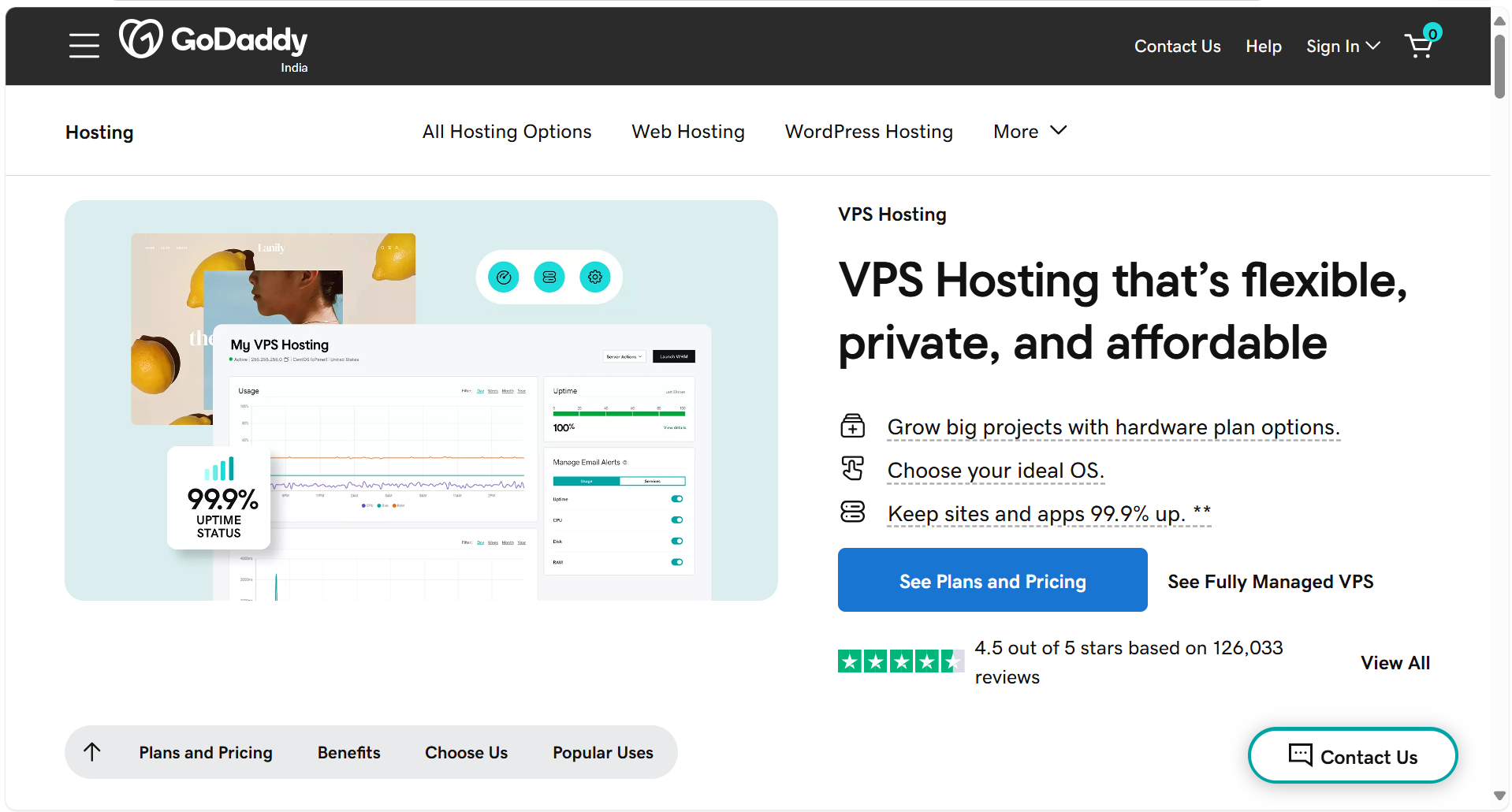
GoDaddy is one of the largest domain registrars and hosting providers globally. Its VPS hosting is designed for users who value simplicity and integration with other GoDaddy services like domains, email, and website builders. GoDaddy offers both managed and unmanaged VPS plans, with options for Windows or Linux operating systems. Their managed plans include server monitoring, automated backups, and 24/7 support, making them ideal for beginners or small businesses that prefer hands-off server management.
- https://www.godaddy.com/en-in/hosting/vps-hosting
Hostinger VPS Hosting
Hostinger has gained popularity for offering high-performance hosting at competitive prices. Their VPS plans run on KVM virtualization, ensuring strong isolation and dedicated resources. Hostinger provides full root access, SSD storage, and a custom control panel that’s intuitive even for newcomers. While their VPS hosting is technically unmanaged, they include helpful tools like a snapshot feature, dedicated IP addresses, and a user-friendly hPanel to simplify server tasks. Hostinger is especially appealing to developers, tech-savvy users, and budget-conscious customers seeking powerful performance without premium pricing.
- https://www.hostinger.com/in/vps-hosting
