Swagger API Tool
Swagger API Tool
Swagger is a popular tool used to design, describe, document, and test APIs in a simple and user-friendly way. API stands for Application Programming Interface, which allows different software applications to talk to each other. Swagger provides a visual interface where developers and non-developers can clearly understand how an API works, what data it accepts, and what responses it returns — without reading complex code.
What is the Swagger Tool?
Swagger is a set of tools built around the OpenAPI Specification (a standard format for describing APIs).
Using Swagger, you can create interactive API documentation that shows:
- All available API endpoints (URLs)
- Request methods (GET, POST, PUT, DELETE, etc.)
- Input parameters
- Response formats
- Authentication requirements
One of the most powerful features is that you can directly test APIs from the browser without writing any code.
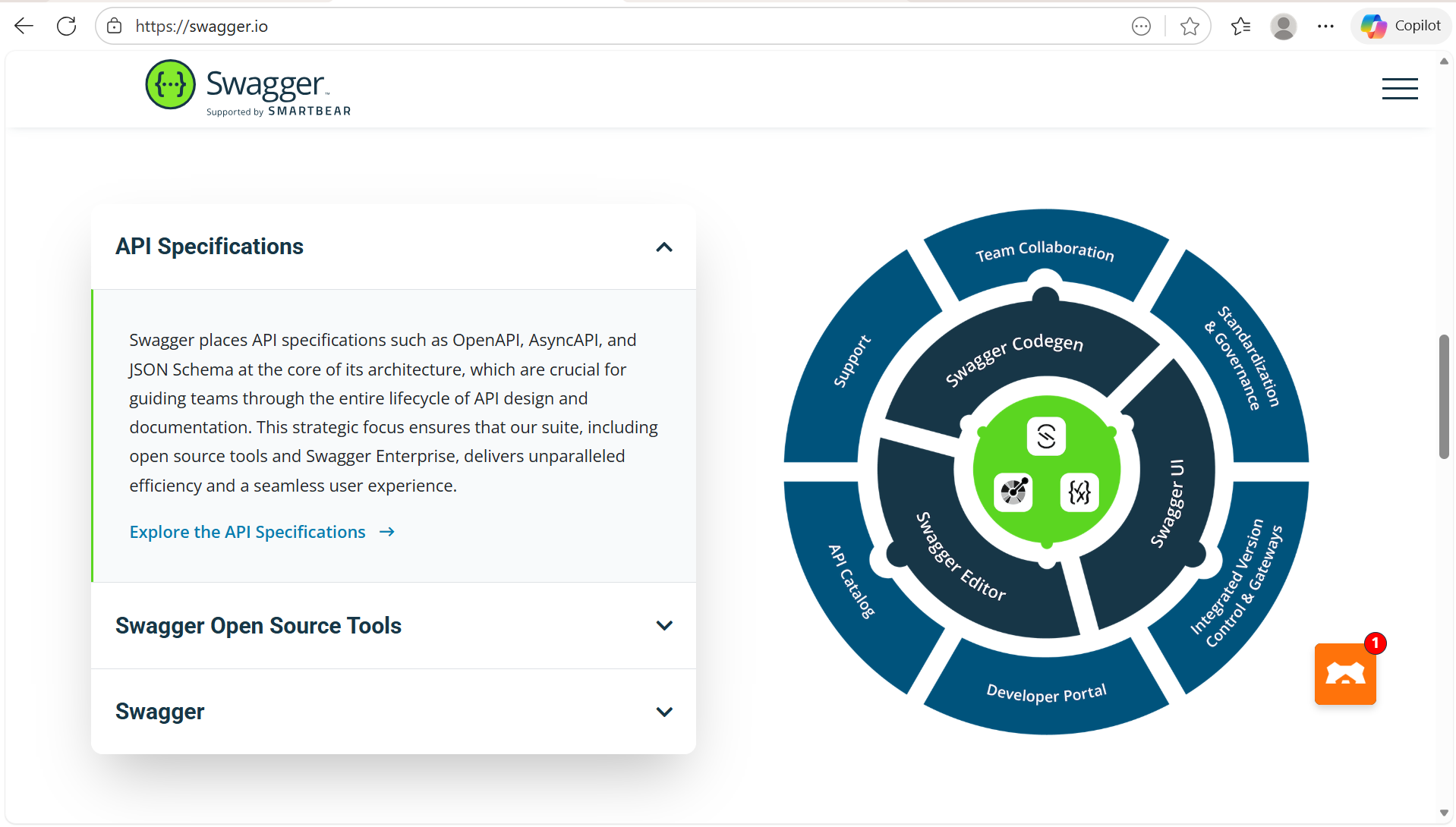
Features of the Swagger Tool
| Feature | Description |
|---|---|
| Auto API Documentation | Automatically generates documentation from API code or configuration. |
| Interactive UI | Provides a web-based interface to view and test APIs easily. |
| Request Testing | Allows sending requests and receiving live responses from the browser. |
| OpenAPI Support | Uses OpenAPI standard format to describe APIs clearly. |
| Input Validation | Shows required fields and data types for API inputs. |
| Response Samples | Displays example responses for easier understanding. |
| Error Visualization | Shows API errors clearly with messages and codes. |
| Authentication Handling | Supports API keys, bearer tokens, and authorization headers. |
Advantages of Swagger
- Very easy for beginners to understand APIs
- Reduces documentation writing work
- Improves communication between front-end and back-end teams
- Saves development time
- Increases API reliability
- Allows live testing without additional tools
- Standardized format used worldwide
- Helps detect errors early
More information
- https://swagger.io/

