Popular Java Frameworks
Popular Java Frameworks
Java is one of the most widely-used programming languages in the world, known for its portability, scalability, and robustness. As applications become more complex, developers rely on frameworks to simplify coding, speed up development, and follow best practices. Java frameworks are pre-written pieces of code that provide a foundation for building software applications. They help developers avoid reinventing the wheel by offering tools, libraries, and architecture needed to streamline the development process.
Plain Java
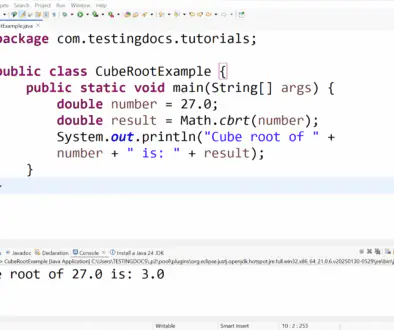
Plain Java, also known as core Java, refers to writing Java programs without any third-party frameworks. It includes fundamental concepts like variables, data types, loops, classes, and objects. Using plain Java is ideal for learning how the language works under the hood. However, as applications grow in size and complexity, maintaining code and building features without frameworks can become inefficient. That’s where Java frameworks come in to provide structure and productivity.
Spring Boot
Spring Boot is a powerful framework that simplifies the development of Java-based web and enterprise applications. It builds on top of the Spring Framework and eliminates the need for complex configuration. With built-in tools like embedded servers and automatic dependency management, Spring Boot helps developers create production-ready applications quickly. It follows the “convention over configuration” principle, allowing developers to focus on writing business logic instead of boilerplate code.
JUnit Framework
JUnit is a unit testing framework used to test individual units of Java code, typically methods or classes. It helps ensure that code behaves as expected and makes debugging easier during development. With features like test annotations and assertions, JUnit enables developers to write repeatable and organized test cases. It plays a crucial role in Test-Driven Development (TDD) and Continuous Integration (CI) environments. JUnit is often the go-to tool for developers aiming to build reliable and bug-free applications.
TestNG Framework
TestNG (Test Next Generation) is another popular testing framework inspired by JUnit but with more advanced features. It supports parallel test execution, parameterized testing, and data-driven testing, making it ideal for complex test scenarios. TestNG is widely used for integration and end-to-end testing in Java projects. It integrates well with build tools like Maven and Gradle and supports reporting and configuration via XML. This makes it a flexible choice for both small and large test suites.