
How to remove software from Ubuntu
In this tutorial, we will go through the steps involved to remove the software from the Ubuntu Linux machine. We can remove unwanted applications
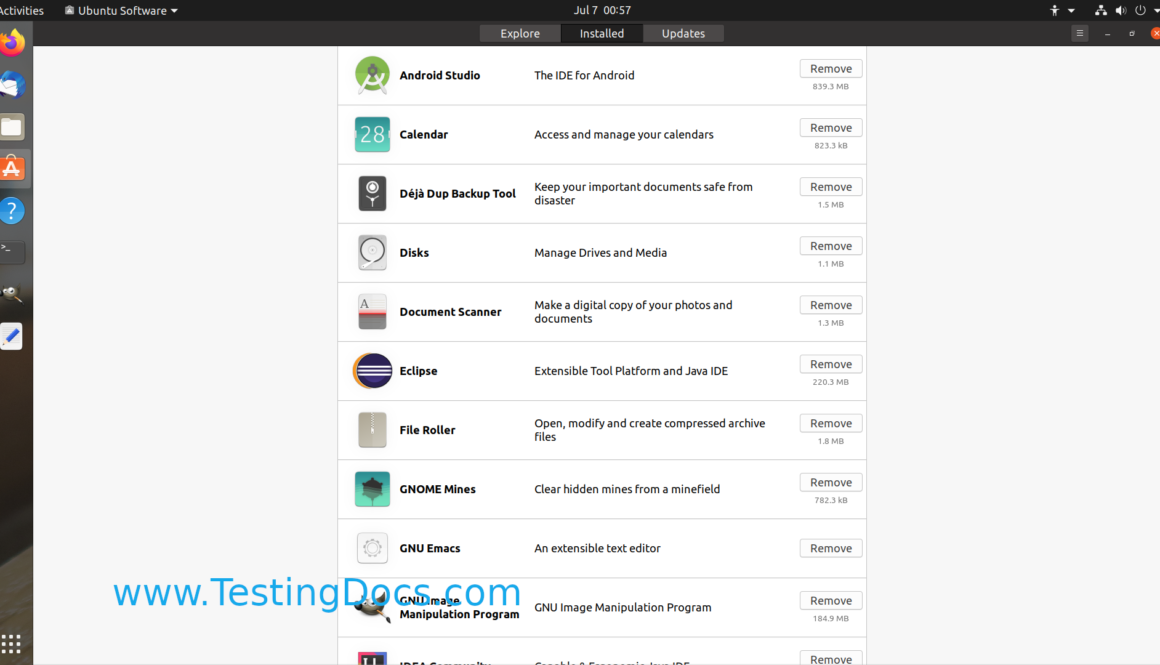
In this tutorial, we will go through the steps involved to remove the software from the Ubuntu Linux machine. We can remove unwanted applications

Overview Eclipse is a free and open-source Integrated Development Environment(IDE). It is best suited for Java development. In this tutorial, we will install Eclipse IDE on Ubuntu Linux machine. JDK Install on Linux https://www.testingdocs.com/install-oracle-jdk-on-ubuntu-linux/ There are many ways to install Eclipse on Ubuntu: Eclipse Installer Eclipse Packages ( Recommended Option Technical savvy option) Ubuntu Software […]
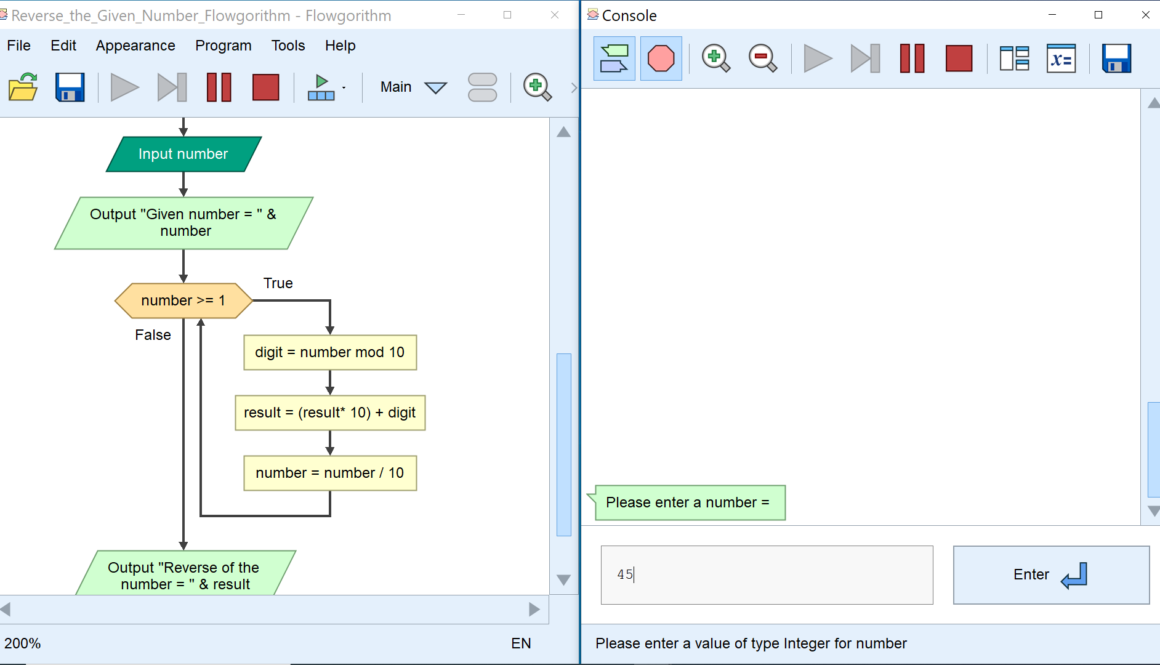
In this tutorial, we will look at a simple Flowgorithm flowchart example. We will design a flowchart to reverse a given number. Let’s first see a sample example
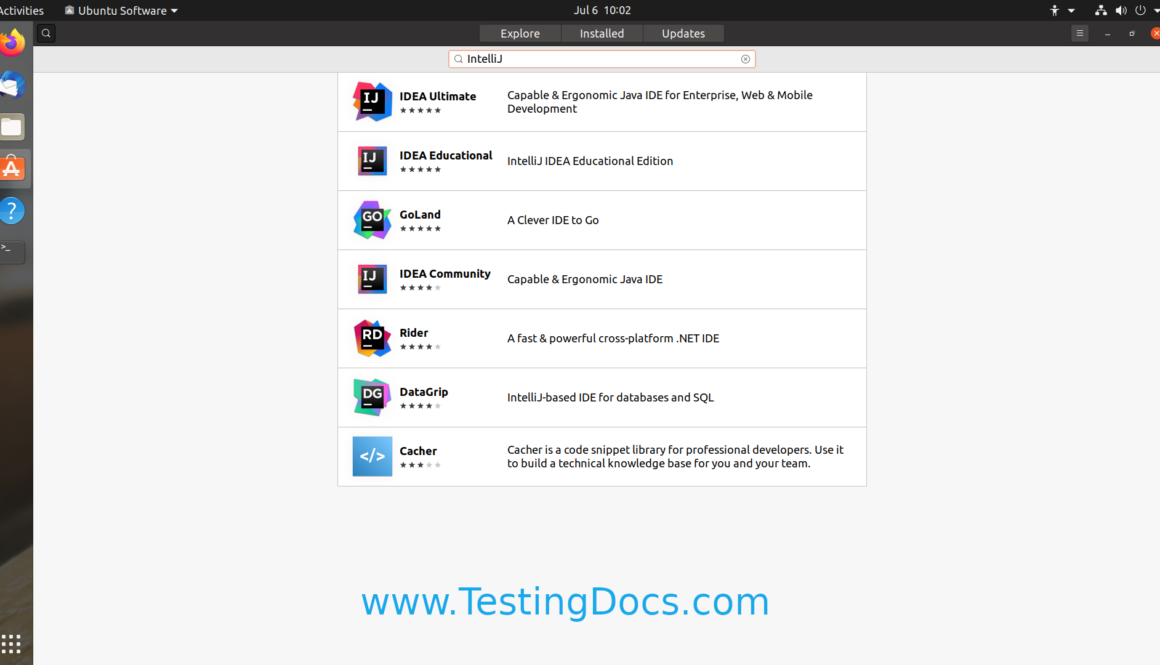
Install IntelliJ IDEA Community Edition IntelliJ IDEA Community Edition is a free and open-source edition by JetBrains. IntelliJ IDEA Community Edition provides the tools we need for code development in many supported platforms. The supported platforms are as follows: Java Groovy Kotlin Scala Android There are multiple editions of the IDE software. The community edition […]

Maven Project from Archetype in NetBeans : In this tutorial, let’s create a Maven project from Archetype from within the NetBeans IDE. Maven tool provides project templates
JUnit Features JUnit is a unit testing framework for the Java programming language and it became important in the development of test-driven development. Annotations are provided by Apache Foundation. Features of JUnit JUnit promotes the idea of testing for developers which emphasis on setting up the test data for a piece of code which can […]